
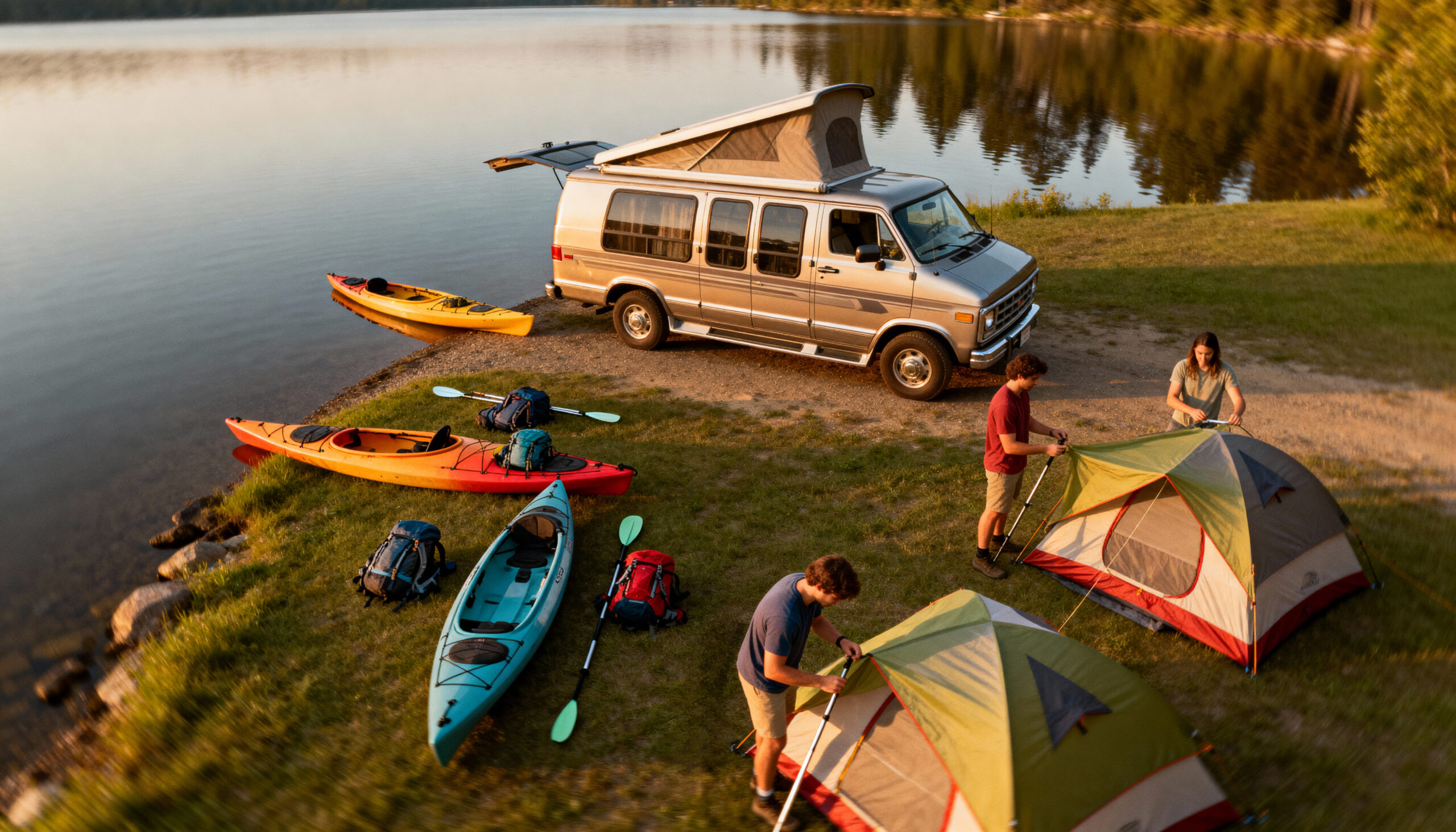
Introduction: More Americans Are Ditching Their Apartments for a Van
Over 1 million Americans currently live in their vehicles full time, and that number keeps growing every year. The cost of renting an apartment in the United States hit a national average of $1,713 per month in 2023. That means millions of people spend more than half their income just keeping a roof over their heads.
So some people are doing something bold. They are buying a van, converting it into a home, and parking it wherever they want. Some park by rivers. Some park in forests. Some park in city lots. The point is the same: they choose where they wake up each morning.
Living in a van down by the river used to be a punchline. Chris Farley made it famous as a joke on Saturday Night Live decades ago. Today, it is a serious lifestyle that saves money, builds freedom, and changes how people think about what they actually need to be happy.
This article is for anyone who is curious about van life. It covers the real costs, the real benefits, the real challenges, and the real steps you can take to start living this way. No fluff. No hype. Just the facts about a lifestyle that might actually change your life for the better.
What Does Living in a Van Down by the River Actually Mean?
The phrase “living in a van down by the river” comes from a popular Saturday Night Live sketch from the early 1990s. In that sketch, Chris Farley played a motivational speaker who used the phrase to describe a life of failure and rock bottom choices. The joke was that only a loser would live in a van by a river.
Times have changed. People who live this way today are not failures. Many of them are young professionals, remote workers, retirees, and families who made a very deliberate choice. They looked at what modern life was costing them and decided to try something different.
Living in a van means converting a cargo van or passenger van into a small, functional home. You sleep in it. You cook in it. You store your belongings in it. You drive it to new places whenever you want. The “by the river” part just means you park somewhere scenic, quiet, and free of charge.
This lifestyle is closely tied to what people call van life. Van life is a broader term for full-time or part-time mobile living done out of a van. It is part of a bigger movement that includes people living in converted school buses, tiny homes, RVs, and boats. The common thread is choosing simplicity and freedom over rent and routine.
The Real Costs of Van Life: Is It Actually Cheaper?
This is the most important question most people ask. The short answer is yes, van life can be significantly cheaper than renting. But it depends heavily on how you set it up.
Here is a basic monthly cost comparison that many van dwellers report:
| Expense | Traditional Apartment | Van Life |
|---|---|---|
| Housing (rent/mortgage) | $1,500 to $2,500 | $0 to $200 |
| Utilities | $150 to $300 | $0 to $50 |
| Gym membership (for showers) | $0 | $10 to $30 |
| Food | $400 to $600 | $300 to $500 |
| Gas | $150 to $200 | $200 to $400 |
| Insurance (renters vs. vehicle) | $50 to $100 | $100 to $200 |
| Total Monthly Estimate | $2,250 to $3,700 | $610 to $1,380 |
The savings can be dramatic. Many van dwellers report cutting their monthly expenses by 50 to 70 percent. That kind of money reduction can eliminate debt fast, build savings quickly, and reduce financial stress in a real and measurable way.
The upfront cost is where people often get surprised. A used cargo van can cost between $5,000 and $30,000 depending on age, mileage, and condition. Converting it into a livable space adds another $1,000 to $15,000 depending on how nice you want it. Some people keep it extremely simple. Others build beautiful wood-paneled interiors with solar panels, refrigerators, and composting toilets.
How to Pick the Right Van for Full-Time Living
Not every van works well for full-time living. Some are too small. Some are too expensive to maintain. Some do not have enough headroom to stand up inside. The van you choose matters more than most beginners realize.
The most popular vans for full-time living are the Ford Transit, Ram ProMaster, and Mercedes Sprinter. All three offer high roof options that let most adults stand upright inside. That matters a lot when you are living in a space 24 hours a day, 7 days a week.
The Ford Transit is the most popular choice because parts are widely available at auto stores across the country. When something breaks, and something always eventually breaks, you can find the parts without waiting weeks for a special order. That reliability matters when your van is also your house.
The Mercedes Sprinter is the most premium option. It looks sharp, runs well, and has a strong community of van converters who have shared thousands of tutorials online. The downside is that repairs cost more and require a Mercedes dealer in many cases. A single repair bill can wipe out months of saved rent.
Older vans can work too if you are on a tight budget. A well-maintained cargo van from the early 2000s can still run reliably for years. Buy one with lower mileage if possible. Get a mechanic to inspect it before you buy. A pre-purchase inspection costs around $100 to $200 and can save you from a very expensive mistake.
Building Your Van: What You Actually Need Inside
A comfortable van conversion does not need to be fancy. What it needs is functional. Most experienced van dwellers agree on a short list of truly essential systems. Everything else is optional.
A sleeping platform is the foundation of any van build. Most people build a fixed platform that holds a full-size or queen-size mattress. Some use a fold-out system to gain more floor space during the day. Fixed platforms are simpler and more durable over time. The mattress should be a memory foam mattress cut to fit, which usually costs between $100 and $300.
Ventilation is critical for health and comfort. A roof-mounted fan like the Maxxair or Fan-Tastic brand costs between $150 and $300 and keeps air moving through the van. Without good airflow, condensation builds up on the walls, mold can grow, and the van gets extremely hot in summer. A quality fan is one of the best investments you can make.
Insulation keeps the van warm in winter and cooler in summer. Most builders use a combination of Thinsulate, spray foam, and rigid foam board. Proper insulation also reduces noise from outside. This step is easy to skip and very hard to add later, so do it right the first time.
A small cooking setup usually consists of a two-burner propane stove, a cooler or 12-volt refrigerator, and a small sink with a hand pump and a water jug underneath. Many van dwellers cook most of their meals this way and find it perfectly adequate for everyday living.
Solar power is the power system most van dwellers rely on. A basic solar setup includes one or two panels on the roof, a charge controller, a battery bank, and an inverter. A 200 to 400 watt system can run lights, charge laptops and phones, power a fan, and keep a small refrigerator running. The cost for a basic solar setup runs from $500 to $2,000 depending on the size and quality of the components.
Where Do You Actually Park a Van?
This is where the river part of “living in a van down by the river” comes in. Finding good places to park and sleep is one of the most important daily skills a van dweller develops.
The United States has an enormous amount of public land. The Bureau of Land Management, or BLM, manages over 245 million acres of land across the western states. Much of this land allows dispersed camping for free, usually for up to 14 days at a time. National Forests also allow dispersed camping in most areas. These are your best friends as a van dweller.
Rivers run through a lot of this public land. Finding a peaceful spot by a river on BLM land is very common in states like Utah, Nevada, Oregon, Colorado, and Arizona. You can wake up to the sound of water, make coffee, and start your day in a place most people pay hundreds of dollars just to visit for a weekend.
In cities, parking is harder. Many van dwellers use a rotation system where they move every night or two. Residential streets, truck stops, Walmarts that still allow overnight parking, casino parking lots, and Planet Fitness locations near a membership gym are all common spots. Apps like iOverlander, The Dyrt, and Campendium help van dwellers find safe, legal places to sleep in any part of the country.
Staying legal matters. Parking in areas with no overnight parking signs will get you a ticket or a knock on the window from police at 2 in the morning. Research local rules before you settle in. Blend in wherever possible. A clean, unremarkable van parked quietly draws far less attention than a decorated, obvious “van life” rig.
The Freedom Factor: Why People Actually Do This
Money is a big reason people choose van life. But it is rarely the only reason. Most long-term van dwellers say the freedom to move is what keeps them in the van long after they could afford an apartment again.
Think about what it means to wake up and not be tied to one city. You can follow good weather. If winter hits hard in Montana, you drive south to New Mexico. If the summer in Arizona feels like standing inside an oven, you drive north to Colorado. Your home moves with you.
This kind of freedom also changes your relationship with work. Many van dwellers work remotely as writers, programmers, designers, customer service agents, or teachers. Others work seasonal jobs at national parks, ski resorts, or harvest operations. The van becomes a mobile base camp that lets them chase work and experiences at the same time.
There is also a mental health side to this lifestyle that does not get talked about enough. A 2021 study published in the journal Environment and Behavior found that spending time near natural bodies of water, which researchers call “blue spaces,” significantly reduces stress and improves mood. People who park near rivers and lakes regularly are literally living in a proven stress-reduction environment. That is worth something that rent money cannot buy.
Honest Challenges of Van Life You Need to Know
Van life has real drawbacks. Anyone who tells you otherwise is not being straight with you. Knowing the challenges before you start makes them much easier to handle when they show up.
Weather extremes are brutal. A van heats up like an oven in summer. It gets ice cold in winter. You can manage this with good insulation, a quality fan, and a small diesel heater like a Webasto or Chinese diesel unit. But it takes planning, and there will still be nights that are uncomfortable.
Staying clean takes effort. Most van dwellers use gym memberships for showers. Planet Fitness offers a membership for around $25 per month that allows access to any location nationwide. This works well in most cities. In rural areas, you rely on rivers, lakes, solar showers, and occasional truck stops with shower facilities. It is manageable but requires adjustment.
Social isolation is real. Humans are social creatures. Spending long stretches of time alone in a van can get lonely. Many van dwellers combat this by connecting with the van life community online, attending van life meetups, staying in hostels occasionally, and being intentional about making plans with friends and family. The loneliness is solvable but needs to be taken seriously.
Mechanical problems can be catastrophic. When your apartment has a problem, you call the landlord. When your van has a problem, your house is broken. A failed water pump, a dead alternator, or engine trouble can leave you stranded and homeless at the same time. Building a mechanical emergency fund of at least $2,000 to $3,000 is not optional. It is essential.
Mail, banking, and legal address issues are real. You need a legal address for your driver’s license, tax filings, bank accounts, and mail. Most van dwellers solve this with a mail forwarding service like Traveling Mailbox or Anytime Mailbox. These services give you a real street address, receive your mail, scan it, and send it to you digitally. Many van dwellers register their vehicle and license in South Dakota or Texas because those states have friendly residency laws for nomads.
Van Life and Relationships: Can You Do This with Another Person?
Yes. Couples live in vans successfully all the time. But it is harder than solo van life for obvious reasons. Two people sharing roughly 80 square feet of living space need to genuinely enjoy each other’s company and have excellent communication skills.
Many couples say van life actually strengthened their relationship. It removes the distractions of big houses, separate rooms, and busy separate schedules. You are forced to be present with each other, figure out disagreements quickly, and build shared experiences every single day.
The build matters more for couples. A van with a fixed bed that both people can access from either side, enough storage for two people’s clothing and gear, and a good workspace for two if both work remotely makes a huge difference in day-to-day comfort. Plan the build with both people’s needs in mind from the very beginning.
Families with children also do this. The van life community has a subset of families who homeschool their children and travel full time. This is more complex but very doable with the right setup and planning. Children who grow up traveling often develop strong adaptability, curiosity, and geographic awareness far beyond their peers.
How to Transition Into Van Life Without Quitting Everything at Once
You do not need to sell all your belongings tomorrow and drive off into the sunset. Most people who succeed at van life do it in stages, and that approach is much smarter.
Start by test driving it. Rent a camper van for a week or two. Apps like Outdoorsy and RVShare let you rent someone else’s already-converted van. This is the cheapest and fastest way to find out if you actually like sleeping in a van before you spend thousands of dollars building one.
Reduce your stuff before you reduce your space. Most people have way more belongings than they realize. Spend a few weeks going through everything you own. Sell, donate, or throw away anything that is not truly useful or meaningful. This process alone is freeing and prepares you mentally for a smaller space.
Save a solid transition fund. Before you go full time, save at least three to six months of expenses. This gives you breathing room when unexpected costs show up, which they always do. Starting van life with no financial cushion is extremely stressful and can force you to give up before you hit your stride.
Line up your income source. Remote work is the most common solution. If your current job does not allow remote work, start building toward one that does. Freelance writing, virtual assistance, programming, online tutoring, and e-commerce are all fields that work well from a van with decent internet access.
Get a Starlink subscription. Internet access is the lifeline of the modern van dweller. Starlink satellite internet works nearly everywhere in the continental United States and delivers speeds fast enough for video calls, large file transfers, and streaming. The hardware costs around $599 and the monthly service runs $120 to $150. For remote workers, this is not a luxury. It is a necessity.
Making Van Life Sustainable Long Term
Some people try van life for a month and go back to an apartment. Others have lived in vans for five, ten, or fifteen years. The difference usually comes down to how well they set up their systems and how honest they were with themselves about what they need.
Sustainability in van life means creating routines that keep you healthy, productive, and connected. It means having a cooking routine so you eat well and do not blow your budget on restaurants. It means having a hygiene routine so you feel clean and confident. It means having a work routine so you stay productive and keep your income steady.
Many long-term van dwellers find they need to slow down after a while. Constantly moving is exciting at first but exhausting over months. Finding a base location you return to regularly, whether that is a city with good infrastructure, a region you love, or near family, gives you stability without sacrificing mobility.
The community matters too. Following other van dwellers on YouTube and connecting with the r/vandwellers community on Reddit gives you a constant flow of real-world tips, troubleshooting help, and honest conversation about what van life is actually like day to day. Learning from people who have already solved the problems you will face saves you enormous amounts of time and money.
Is Van Life Right for You? An Honest Assessment
Van life is not for everyone, and there is nothing wrong with that. It is a lifestyle that works extremely well for specific kinds of people and works very poorly for others. Being honest about which category you fall into saves you a lot of wasted money and frustration.
Van life works well for people who value experiences over possessions, who are comfortable with uncertainty, who enjoy problem-solving, who are self-disciplined about money and routines, and who genuinely want more time in nature. It also works very well for people with high housing costs who want to eliminate or dramatically reduce that expense.
Van life works poorly for people who need a lot of personal space, who get very anxious about uncertainty, who have medical needs that require stable infrastructure, who work jobs that require a fixed physical location, or who simply love having a large, comfortable home. All of those are legitimate preferences and not failures of character.
The honest question to ask yourself is this: what do you value more, the comfort and stability of a fixed home or the freedom and savings of a mobile one? There is no right answer. There is only the right answer for you, and only you can figure that out.
Conclusion: The Van Is Not the Punchline Anymore
Living in a van down by the river used to mean you had hit rock bottom. In 2024, it increasingly means you have made a smart, intentional choice to live on your own terms. It means you looked at a $2,000 monthly rent bill and said there is a better way to use that money.
It is not a perfect lifestyle. The weather will challenge you. Parking will stress you out sometimes. Mechanical problems will happen at inconvenient moments. Showering will require more planning than you ever thought about before. These are real inconveniences that real people deal with every single day.
But the benefits are real too. The savings are real. The freedom to wake up by a river in a national forest, drink your coffee in silence, and start your day on your own schedule is real. The feeling of owning your time instead of trading it all for rent money is real and powerful.
If you are curious about van life, do not wait for perfect conditions. Start where you are. Test it first. Research your van options. Start cutting down your belongings. Build your emergency fund. Talk to people who are already doing it and learn from their experience.
The river is out there. The van could get you there. The only question is whether you are ready to try.